
The Edge Apps Have Over Websites, and Why You Still Need Both
Apps are better suited for repeat tasks, personalization, and complex workflows, while websites remain essential for discovery, trust, and growth.
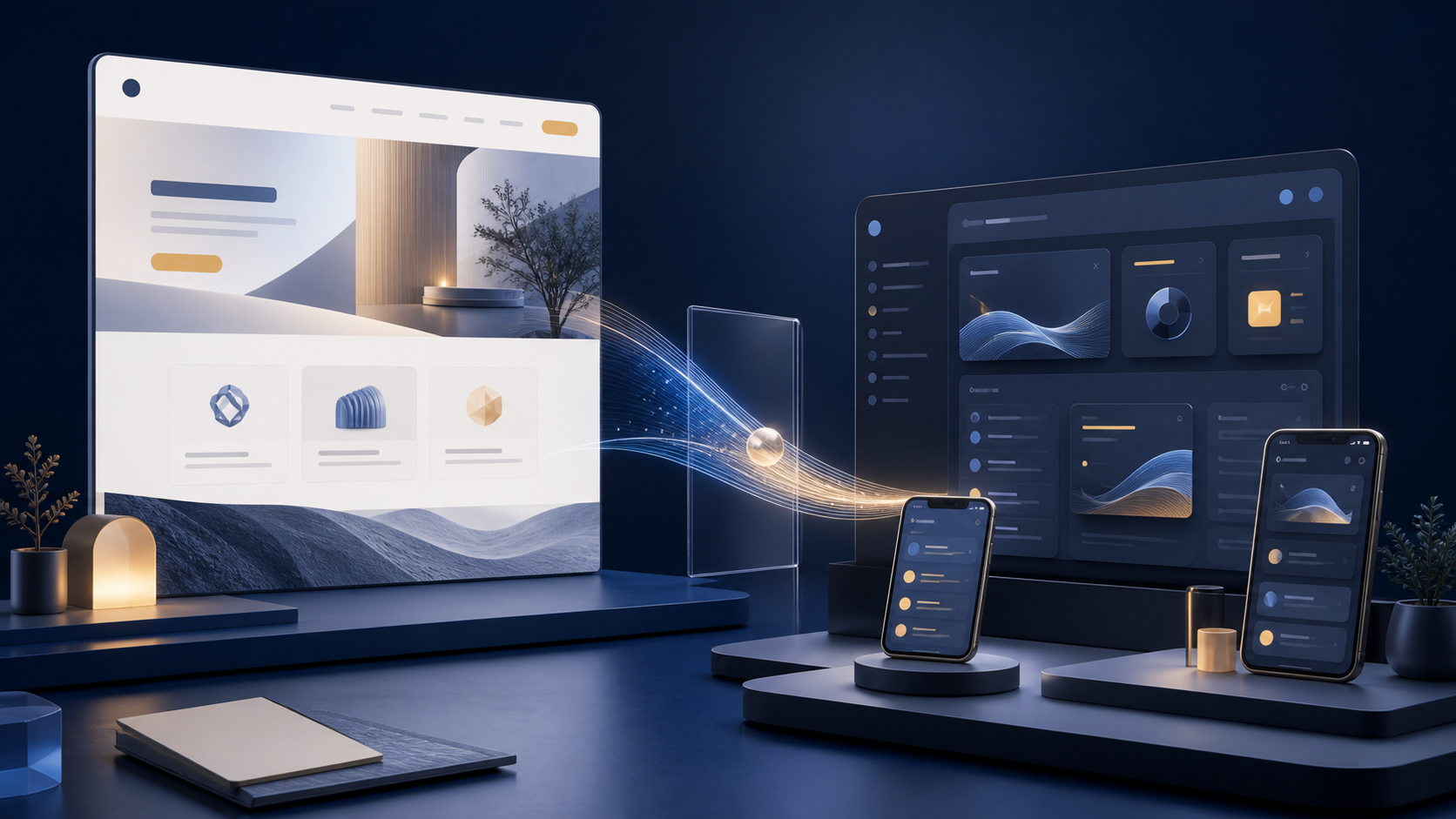
Websites and apps are often discussed as if a business must choose one. In practice, they usually serve different stages of the customer relationship.
A website helps people discover the business, understand what it offers, compare options, and decide whether to take the next step. An app becomes valuable when people need to return, complete ongoing tasks, manage information, or interact with a service in a more personal way.
The advantage of an app is not that it replaces the website. Its advantage is depth. A good app can turn a one-time visit into an ongoing experience.
The difference between a website and an app
A website is usually built for access and communication. Anyone can open it through a link, browse public information, and move between pages without installing anything or creating an account.
An app is usually built for interaction. It may be a web app used in a browser, a mobile app installed on a phone, or an internal application used by a team. Apps often include accounts, saved data, permissions, dashboards, workflows, notifications, and integrations.
The boundary is not always obvious. A banking website may include a secure customer application. A service company may have a public marketing site and a client portal under the same domain. What matters is not the label. What matters is the job the experience needs to perform.
Apps support repeat use
Most visitors use a website occasionally. They may research a service, read an article, find contact information, or submit a form. An app is designed for people who need to return.
Customers might use an app to:
- Track an order or project
- Manage appointments
- Review account information
- Upload documents
- Communicate with a service team
- Save preferences
- Complete recurring tasks
Employees might use one to manage leads, approve requests, update inventory, schedule work, or monitor operations.
When the same process happens repeatedly, an app can reduce the number of steps and remember where the user left off. That continuity is difficult to create with a collection of public web pages alone.
Apps can adapt to each user
A website generally presents the same core information to everyone. Content may change based on location, campaign, or browsing behavior, but the experience remains primarily public.
An app can respond to a specific account. It can show relevant records, permissions, recommendations, deadlines, saved work, and next actions. A customer sees their information. A manager sees team-level data. An administrator sees system controls.
This personalization makes complex services easier to use. Instead of searching through pages for the right information, users arrive at a workspace organized around what matters to them.
Personalization should still be purposeful. More data and more settings do not automatically create a better product. The app should use what it knows to remove friction, clarify priorities, and help the user complete a task.
Apps handle complex workflows better
Websites are excellent at explaining a process. Apps are better when people need to participate in that process.
Consider a construction company that needs customers to approve estimates, upload documents, review progress, and make payments. A website can describe how the company works and collect an initial inquiry. A customer portal can manage everything that happens after the project begins.
The same pattern applies across many industries:
- A clinic website explains services, while a patient app manages appointments and forms
- A financial firm website builds trust, while a secure portal provides reports and document exchange
- A logistics website attracts customers, while an operations app tracks shipments and exceptions
- A membership website explains the organization, while an app manages access, events, and member activity
Apps can guide a user through steps, validate information, save progress, apply business rules, and coordinate actions across multiple people. That makes them suitable for work that would otherwise depend on spreadsheets, email threads, or disconnected tools.
Mobile apps can use the device itself
A mobile app can take advantage of features that are closer to the user and the physical environment. Depending on the product, that may include:
- Camera access for scanning or documentation
- Location services
- Push notifications
- Biometric sign-in
- Offline access
- Bluetooth or connected device features
- Home screen presence
Modern websites can support some of these capabilities, but installed mobile apps often provide a more consistent experience for frequent use. They can also feel faster and more integrated with the device.
These advantages matter only when they support a real need. A business should not build a mobile app simply to have an icon on a customer’s phone. Installation creates an extra commitment, so the product needs to offer enough ongoing value to earn that space.
Apps can improve retention
A website is often designed to attract attention. An app is often designed to keep a useful relationship going.
Saved progress, account history, relevant notifications, personalized content, and easier repeat actions can give customers a reason to return. The app becomes part of how they receive the service rather than only a place where they learned about it.
This can improve retention when the app makes the customer’s life easier. It can have the opposite effect when notifications are excessive, navigation is confusing, or the product adds work instead of removing it.
Retention should come from utility. The strongest apps become habitual because they solve a recurring problem well.
Apps create better operational data
When important work happens through email, phone calls, documents, and spreadsheets, it can be difficult to understand the full process. Information becomes scattered, and leaders rely on manual reports or incomplete snapshots.
An app can create a structured record of what happened. It can track stages, response times, completion rates, usage patterns, and recurring points of friction. That data can help the business improve both the customer experience and its internal operations.
Data collection should be limited to what the product genuinely needs. Customers and employees should understand what information is being collected and why. Security, privacy, permissions, and retention policies must be part of the product plan from the beginning.
Apps can connect several systems into one experience
Businesses often rely on specialized tools for payments, scheduling, customer management, inventory, communication, reporting, and fulfillment. Each tool may work well on its own, but asking customers or employees to move between them can create friction.
A custom app can provide one focused interface while connecting the appropriate systems behind the scenes. Users see a process that makes sense for their role rather than the structure of the underlying software.
This does not require replacing every existing platform. In many cases, the best app acts as a useful layer over tools the business already trusts.
Why the website is still essential
The strengths of an app do not reduce the importance of a website. In fact, the app often depends on the website to create the relationship in the first place.
Websites are easier to discover
Public website pages can appear in search results, earn links, be shared instantly, and answer questions before a customer knows the business. A private app experience cannot do that job effectively.
The website provides the content search engines and answer engines need to understand the company. Service pages, location information, case studies, articles, and frequently asked questions all contribute to visibility.
Websites require less commitment
A link opens immediately. There is no installation, account setup, or permission request before a visitor can learn about the business.
That low barrier is important early in the customer journey. People need space to browse, compare, and build confidence before they are ready to create an account or download an app.
Websites establish credibility
Customers expect a legitimate business to have a clear, current, professional website. It confirms the brand, explains the offer, presents proof, and provides reliable contact information.
Even when most existing customers use an app, new customers, partners, job candidates, and members of the press may judge the company through its public website first.
Websites support campaigns and changing messages
Marketing teams need to publish landing pages, announcements, educational content, and new offers without waiting for an app release. A flexible website makes that work faster and easier to share.
The website can also explain the value of the app, show what it does, and guide the right people toward registration or installation.
When a business needs an app
An app may be worth considering when several of these are true:
- Customers or employees complete the same process repeatedly
- Users need accounts, saved data, or personalized views
- A workflow involves several steps, roles, or approvals
- The business relies heavily on spreadsheets or manual coordination
- Users need secure access to records or documents
- Mobile device capabilities would materially improve the experience
- Existing tools do not fit the way the business operates
- Better operational data would support important decisions
An app is less likely to be the right first move when the main need is explaining services, generating leads, publishing content, or establishing credibility. Those are website problems.
When the website and app should work together
For many businesses, the strongest model is a connected system:
- The website attracts the right audience through search, referrals, and campaigns.
- Clear content helps visitors understand the offer and trust the company.
- A visitor books, buys, applies, or creates an account.
- The app supports the ongoing service or workflow.
- Data from the app helps the business improve the experience over time.
The transition should feel natural. Visual design, language, account setup, and customer support should remain consistent across both experiences. Customers should not feel as if they have moved between unrelated products.
Start with the business problem
The right question is not whether apps are better than websites. The right question is what customers and employees need to accomplish.
If the goal is discovery, education, credibility, or lead generation, begin with the website. If the goal involves repeat actions, personalization, complex workflows, or deeper system access, an app may provide the better experience. If the business needs both, they should be planned as connected parts of the same customer journey.
A strong website opens the door. A useful app gives people a reason to stay.
ZanaWorks builds premium websites, web apps, and mobile apps around real business needs. If you are deciding what your next digital product should be, tell us what the business needs to accomplish.